top of page

TRAILER
Platform - PC Duration - 4 Months Tools - Unreal Engine 5 Team Size - 21
ABOUT
Remanence was my capstone project at DigiPen as part of its GAM 375 course, where I joined the team as a combat designer towards the end of development to address key design issues surrounding the game's combat and enemy AI variety. This was a really unique opportunity to join a team that was part-way through development and elevate design in the unique environment of limited resources + locked content. A lot of my process and design surrounding this game is influenced by this fact and is key context to my work on Remanence.
My primary focus was on translating the pacing and readability of traditional third-person action combat into a first-person context. This meant experimenting with attack timings, hit reactions, and stat balancing to create a sense of clarity and flow that's often challenging to achieve for melee first-person combat.
Via this process, I learned how critical intuitive clarity is when designing first-person melee combat. Unlike third-person games, where spatial awareness and animation cues are more apparent, first-person combat demands a tighter focus on timing, feedback, and readability. I learned how small design choices - such as adjusting windup, fine-tuning hitstop, and the resulting damage - create a sum that dramatically impacts how players perceive combat and more importantly, how to create engaging combat encounters via those simple variations.
THE PITCH
Remanence is a first-person Soulsborne-inspired game that reimagines the traditionally third-person combat of the genre into a fully first-person perspective, offering a unique and immersive combat experience.
Set in a mysterious, atmospheric world, the narrative is conveyed entirely through environmental storytelling.
ROLE
Combat Designer
AVAILABLE ON


DESIGN CONCEPTS


TIP: CLICK TO JUMP TO TOPIC
DESIGN CONCEPTS
My design work on this project went through numerous iterations. The sections below provide a brief look at the diverse combat-oriented design challenges I faced, the iterative processes and influences that shaped my solutions, and how these experiences have contributed to my growth as a designer.
If you're in a rush, start here!
TIP: CLICK TO JUMP TO TOPIC
DESIGN CONCEPTS - PLAYER
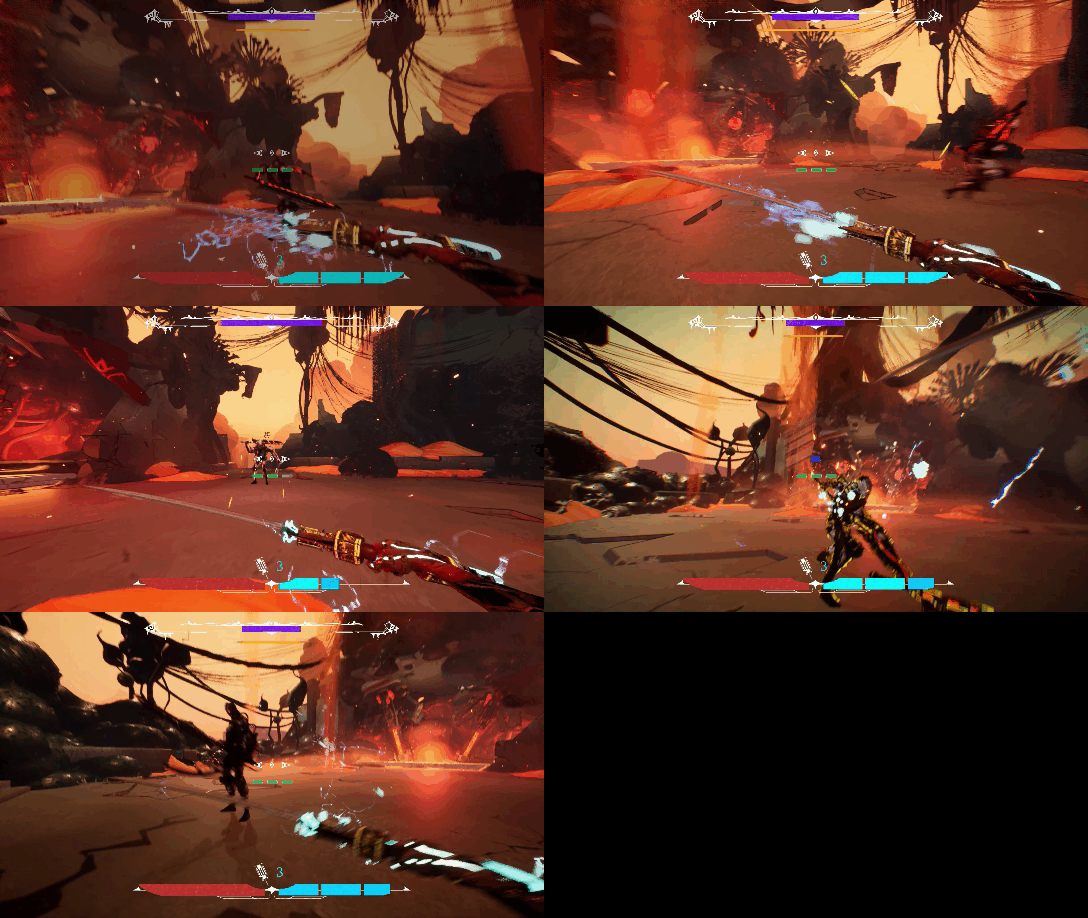
PHILOSOPHY - "DANCE WITH DEATH"
The team's existing design philosophy when I was onboarded was the concept of a "Dance With Death." This philosophy centered on rewarding players who engaged aggressively in "push-forward" style combat. Emphasizing precision and composure under pressure while discouraging timidity.
However, the combat experience at the time was running into some key obstacles that defied this philosophy. Playtest feedback indicated combat tactics rooted in timidity were equally as efficient as engaging in high-risk push-forward combat. My goal was to help curb these tactics but also give more combat definition to the player's toolkit + polish the combat experience.
PLAYER HUD
I believe combat - in any form, whether in video games or real life - is ultimately an exchange of resources. So the first thing I wanted to examine was not just what resources existed, but how they were communicated.
When I joined the team, there were four key player resources: Health, Charge, Stamina, and Heals. At the time, all of these resources but heal were represented as a traditional analogue bars. A recurring piece of feedback was that tracking resource bars mid-fight felt it overloaded the player's mental stacks, making it difficult to stay focused on positioning and timing.
The team also worried that, because of this difficulty parsing information, players might default to timid play, hesitating in combat to give themselves more time to read resources.
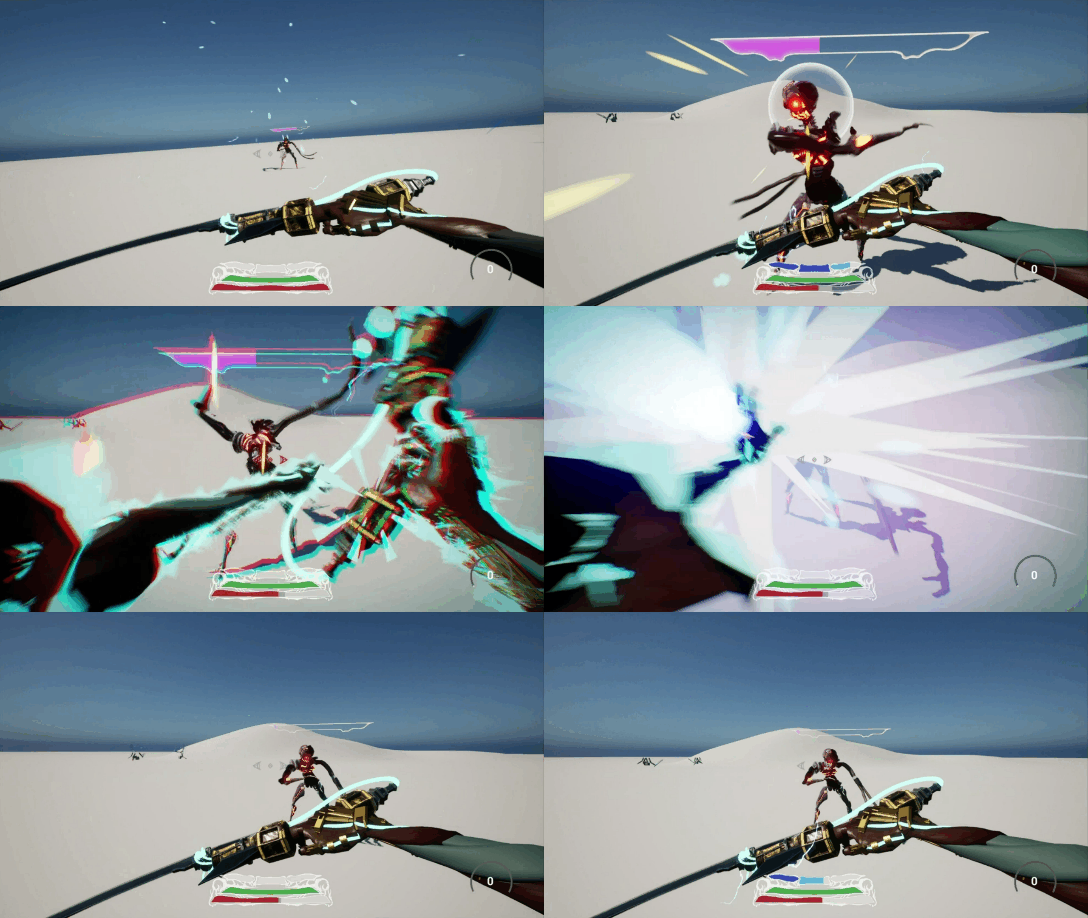
PROTOTYPE HUD SNIPPET
IDEATION
Given the feedback, I wanted to really understand why players found parsing resources overwhelming mid-combat. Many contemporary games feature even more resources, yet feel manageable.
My initial hypothesis focused on HUD positioning. Multiple bars were stacked together, looked similar, and filled/depleted the same way. I suspected this visual similarity and layout contributed to the cognitive load players experienced.
VALIDATION
To investigate, I played the game and quickly realized it wasn't all the resources that were problematic to track - stamina in particular was hard to track.
It fluctuated rapidly during combat and its position on the HUD made it difficult to monitor. Other resources, like Health or Charge, changed more slowly and were easier to follow, making stamina the primary readability issue.
ADJUSTMENTS
So collaborating with the UI designer and artist, we made the following design adjustments to test:
Stamina becoming a pip-based resource
-
Since stamina already depleted in discrete chunks, converting it to pips required minimal balance changes.
Stamina pips placed under the player's cursor
-
Stamina fluctuates rapidly during combat, so placing it closer to the crosshair makes it easier to track in real time.

DID IT WORK?
Overall, Yes!
Adjusting stamina did made combat resources much easier to parse in subsequent playtests. While the UI team later implemented broader UI changes, these adjustments improved moment-to-moment combat readability and are what players see in the final game!
FINAL HUD SNIPPET
PLAYER COMBAT ACTIONS
The most involved section of design I worked on was elevating the player's combat actions in response to critical feedback. The process was a series of layered iterations.
When I joined the team, the player's kit was largely asset-locked - no new art assets could be created, but I could adjust logic in-engine. The kit included a three-hit combo, energy blast/finisher, dash, and a guard/parry. Playtests revealed key feedback: Attacks lacked "individuality" and felt overly committal, overall it felt like movement + combat weren't fully synergistic, and the player's flashy energy blast/finisher felt awkward in practice.
These pain-points meant the combat toolkit didn't fully embody the team's "Dance with Death" philosophy and sometimes encouraged hit-and-run play, especially among newer players. My role was to tackle these challenges and refine the feel of the player's combat.
PLAYER ATTACKS
IDEATION
The first area I focused on was escalating reward. As players progress through a combo, they naturally become vulnerable to counterattacks and increasing reward was low-barrier in terms of implementation.
I hypothesized that increasing the payoff of the final hit would give a sense of individuality and justify the existing commitment required, keeping combos risky but worthwhile. While I had other thoughts on other approaches, it was an immediately explorable starting point.
VALIDATION
To verify whether this idea was worth actionably pursuing, I reviewed playtest footage and observed how players - especially newer ones - engaged with combat.
It became clear that many players would perform only one or two hits before pausing for an inevitable counterattack. With the final hits offering minimal reward while incoming attacks could deal up to 80% of the player's HP, there was little incentive to complete the combo.
ADJUSTMENTS
Using our combat actions data table, I adjusted player + enemy/boss health and damage to make the final combo hit meaningfully rewarding without breaking balance, testing whether higher payoff would encourage players to complete full combos.
Combo Attack Damage
-
Damage increases exponentially as the combo progresses, with the final hit dealing 5x the initial attack's damage.
DID IT WORK?
Not quite - while escalating damage encouraged player to finish their combos more often, hit-and-run tactics still persisted. Individuality was the core issue addressed with this change but work remained.
It was still a step in the right direction. Subsequent feedback showed improvement - players found the the last hit distinctive and the commitment more rewarding for its risk than before.
There was still room to grow!
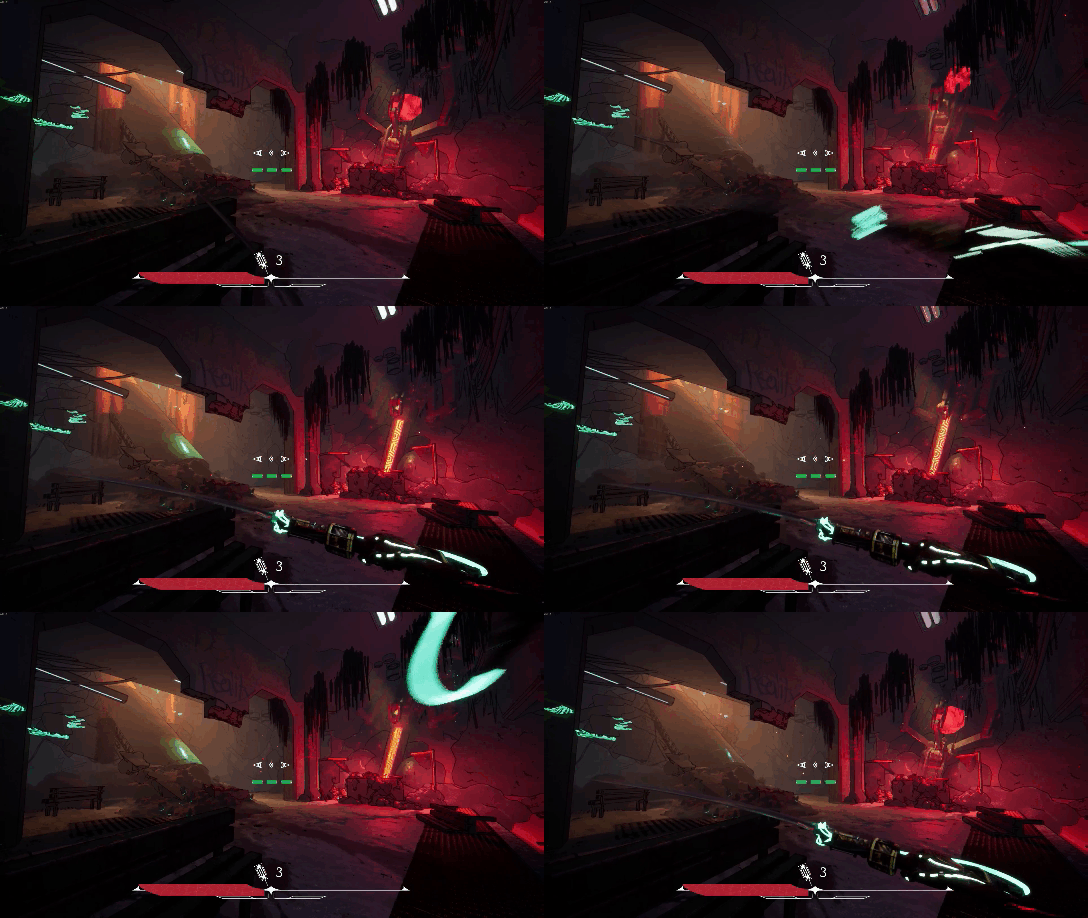
REEVALUATE
Modifying the damage was a low-barrier change I had hoped would address critical feedback about player combat - without having to develop new mechanics - but it became clear that deeper, more involved adjustments were needed.
BACK TO THE DRAWING BOARD!
IDEATION
It became clear that larger changes were needed to address the core combat issues, so I focused on an adjustments that could work to elevate combat feel: Cancel Windows.
Cancel Windows are short periods where players can interrupt one action to perform another - for example, “reload canceling” in a shooter. They make combat feel more responsive and fluid but have major implications for balance and player expression.
At the time, cancel windows were almost nonexistent due to a philosophy that players should fully commit to every attack. I suspected this lack of flexibility, especially for defensive actions, was a major reason combat encouraged hit-and-run play - when your only options are all-in or all-out, it’s safer to disengage.


VALIDATION
Given that these were entirely new mechanics, these mechanics were rapidly hard-coded prototyped into the player blueprints to validate their impact as quickly as possible.
During testing, the results were promising. Paired with the earlier damage adjustments, hit-and-run tactics became far less effective, and players were incentivized to stay engaged in close combat - even with these early, rough implementations.
While this made attacks less committal overall, it was a clear upgrade for player combat feel. With careful tuning, I believed this approach elevate responsiveness reasonably without removing the risk of over-commitment - players still had to face consequences for missed attacks.
ADJUSTMENTS
Collaborating with our gameplay engineers, New blueprint logic was introduced to support Cancel Windows in our montages. While certain limitations remained due to time - such as the absence of conditional canceling (allowing a cancel only on a successful hit). We adjusted the player's combat actions to enable canceling.
Cancel Windows
-
Cancel Windows were implemented towards the end of attacks, making last-second parrying/guarding a possibility.

DID IT WORK?
With both adjustments in place, Yes!
Combos gained individuality through escalating damage and a high-risk, high-reward finisher. The improved canceling system made defensive options more responsive, encouraging players to stay in the pocket and engage in the “Dance with Death” we aimed for.
Playtest feedback reflected this shift - hit-and-run tactics became deeply inefficient compared to fighting in the pocket, while the core Soulsborne sense of mastery and challenge remained intact.

pardon our dust!
sTILL COOKING UP THE REST!
bottom of page